

Quick answer
A mount rinjani national park tour requires registration at park gates between 07:00 and 15:00, payment of the 250,000 IDR per-person daily conservation fee, and coordination with licensed guides for overnight treks. The park operates year-round with daily gate hours from 07:00 to 19:00, though the climbing season runs April through November when trails remain passable. Most trekkers arrive between 07:00 and 13:00 to complete the ascent to Sembalun Crater Rim or Senaru Rim camps before nightfall.
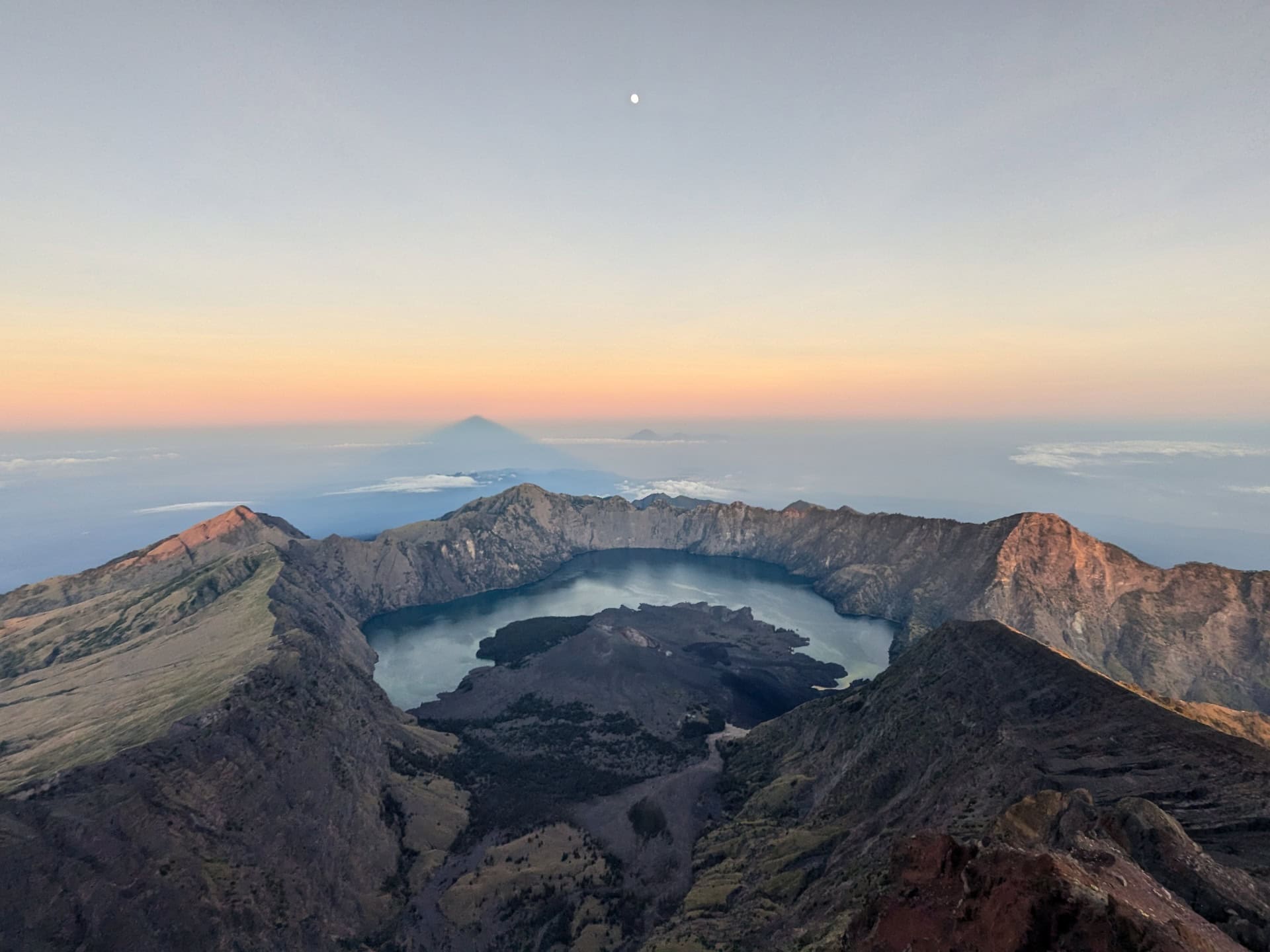
The conservation fee structure at Mount Rinjani National Park funds trail maintenance across three primary trekking routes, each originating from different villages on the volcano's flanks. Sembalun Crater Rim (2,639m) serves as the standard base camp for summit attempts, reached via an eight-hour climb from Sembalun Lawang village on the eastern approach. The Senaru route on the northern slope takes trekkers through montane forest to Senaru Crater Rim (2,641m) with direct views of Segara Anak crater lake, while the less-traveled Timbanuh route on the western side offers a longer, more gradual ascent through savanna grasslands. Registration at park gates in Sembalun or Senaru villages occurs before the trek begins, not at the trailhead itself. Rangers verify guide credentials, collect conservation fees, and record trekker details for safety monitoring. The 15:00 check-in deadline exists because the first climbing segment to either crater rim camp requires six to eight hours, and descending rocky volcanic slopes after dark presents significant injury risk. Trekkers who miss the cutoff must postpone until the following morning. Segara Anak crater lake sits 600 meters below the crater rim at an elevation of 2,000 meters, formed by volcanic activity roughly 13,000 years ago. The lake spans two kilometers in diameter and reaches depths of 230 meters, fed by rainfall and underground springs. Summit attempts from either crater rim camp begin between 02:00 and 03:00 to reach the 3,726-meter peak by sunrise, a three-hour climb over loose scoria and volcanic ash that becomes treacherous in wind or rain. Guided trekking remains mandatory for overnight routes, though day hikes to the first checkpoint below crater rim camps do not require guide accompaniment. Licensed guides coordinate porter logistics, camp setup at designated sites, and emergency communication via satellite phone, as cellular coverage disappears above 1,500 meters. The Rinjani Trek Management Board certifies all operating guides and enforces waste-removal protocols that prohibit leaving any materials on the mountain. Water sources exist at crater rim camps and at Segara Anak lake, though all drinking water requires filtration or boiling due to livestock grazing in lower elevations.
“Summit attempts from crater rim camps begin between 02:00 and 03:00 to reach the peak by sunrise, a three-hour climb over loose volcanic ash that becomes treacherous in wind.”
Mount Rinjani National Park Tour Visit Planning
Most trekkers follow multi-day itineraries that balance altitude gain with acclimatization and rest. The standard routes span 2–4 days depending on whether you target the crater rim, summit, or Segara Anak Lake.
Sembalun Gate to Pos 1
Register at the gate by 13:00, then trek 3–4 hours through open savanna to the first rest post at 1,300 m. Carry sufficient water as shade is minimal.
Pos 1 to Pos 3 Camp
Continue 3–4 hours through forest and grassland to Pos 3 (2,000 m), the standard overnight camp for summit attempts. Set up before dark to prepare for the pre-dawn start.
Summit Push from Pos 3
Depart by headlamp for the 3–4 hour scramble to the summit at 3,726 m, aiming to reach the crater rim by sunrise. The scree slope requires steady footing and frequent breaks.
Descent to Segara Anak Lake
Return to Pos 3 for breakfast, then descend 3–4 hours to the caldera lake at 2,000 m. The hot springs near the lakeshore offer a recovery stop before camping.
Lake to Senaru Rim
Climb out of the caldera via the northern trail, a steep 3-hour ascent to the Senaru crater rim. The route passes Segara Anak viewpoint and waterfall turnoffs.
Senaru Rim to Gate Exit
Descend 4–5 hours through montane forest to Senaru Gate, completing the traverse. Knees take the most strain on this final leg, so trekking poles help.
Optimal Timing for Your Mount Rinjani National Park Tour
The dry season from April to December, and especially June through September, is the best window for a Mount Rinjani trek, since trails are officially open and rain-related trail closures are unlikely.
April to May
Moderate, fewer trekkers than peakDry, daytime 20–30°C, cool at altitude
Trails have just reopened after the wet season closure, with stable weather and thinner crowds than midyear.
June to August
Highest, peak international seasonDry and clear, nights near 5–10°C at altitude
This is the busiest stretch of the dry season, with the clearest skies but the most people on the trail and at campsites.
September to October
Moderate to highDry, daytime warm, cool nights
Weather remains stable with slightly thinner crowds than midsummer, making it a practical alternative to June through August.
January to March
Trails typically closedWet, heavy rain, poor visibility
Park authorities generally close the main trekking routes in this period due to landslide risk and low visibility, so treks should not be planned now.
Weekday mornings (dry season)
Fewer groups at the gate—
Arriving within the recommended 07:00–13:00 window on weekdays avoids the heavier weekend gate traffic and keeps trek segments on schedule before dark.
Verdict: The best slot is a weekday morning arrival, at gate opening, sometime in June through September or the quieter September to October stretch of the dry season.
Essential Preparation for a Mount Rinjani National Park Tour
Multi-day treks to Mount Rinjani's summit require physical readiness, mandatory permits, and specialized equipment beyond standard day-hike gear.
-
Register with a licensed trekking operator — Solo trekking is prohibited; all visitors must trek with a registered guide and porter team.
-
Obtain a SIMAKSI trekking permit — This mandatory permit is processed through your operator and includes the 250,000 IDR conservation fee.
-
Provide a medical fitness certificate — Operators require proof of adequate fitness for high-altitude trekking, especially for summit attempts.
-
Pack a four-season sleeping bag — Crater rim temperatures drop to 5°C at night; standard bags provide insufficient insulation.
-
Bring water purification tablets or filter — Refill points exist on trails, but natural water sources require treatment before consumption.
-
Carry trekking poles and headlamp — Steep volcanic scoria descents demand poles for stability; pre-dawn summit pushes require hands-free lighting.
-
Confirm your departure gate and time — Senaru and Sembalun entry points serve different routes; verify your start location 24 hours before departure.
Check availability
Frequently Asked Questions About Mount Rinjani National Park
Everything you need to know about mount rinjani national park tour