

Quick answer
Mount Rinjani weather divides into two distinct seasons: the dry season (April through November) brings minimal rainfall and stable conditions ideal for trekking, while the wet season (December through March) delivers heavy monsoon rains that close routes and trigger landslides. Summit temperatures range from 4°C to 10°C at night year-round, while base-camp zones stay between 15°C and 22°C. Rainfall peaks in January and February, often exceeding 400mm monthly.
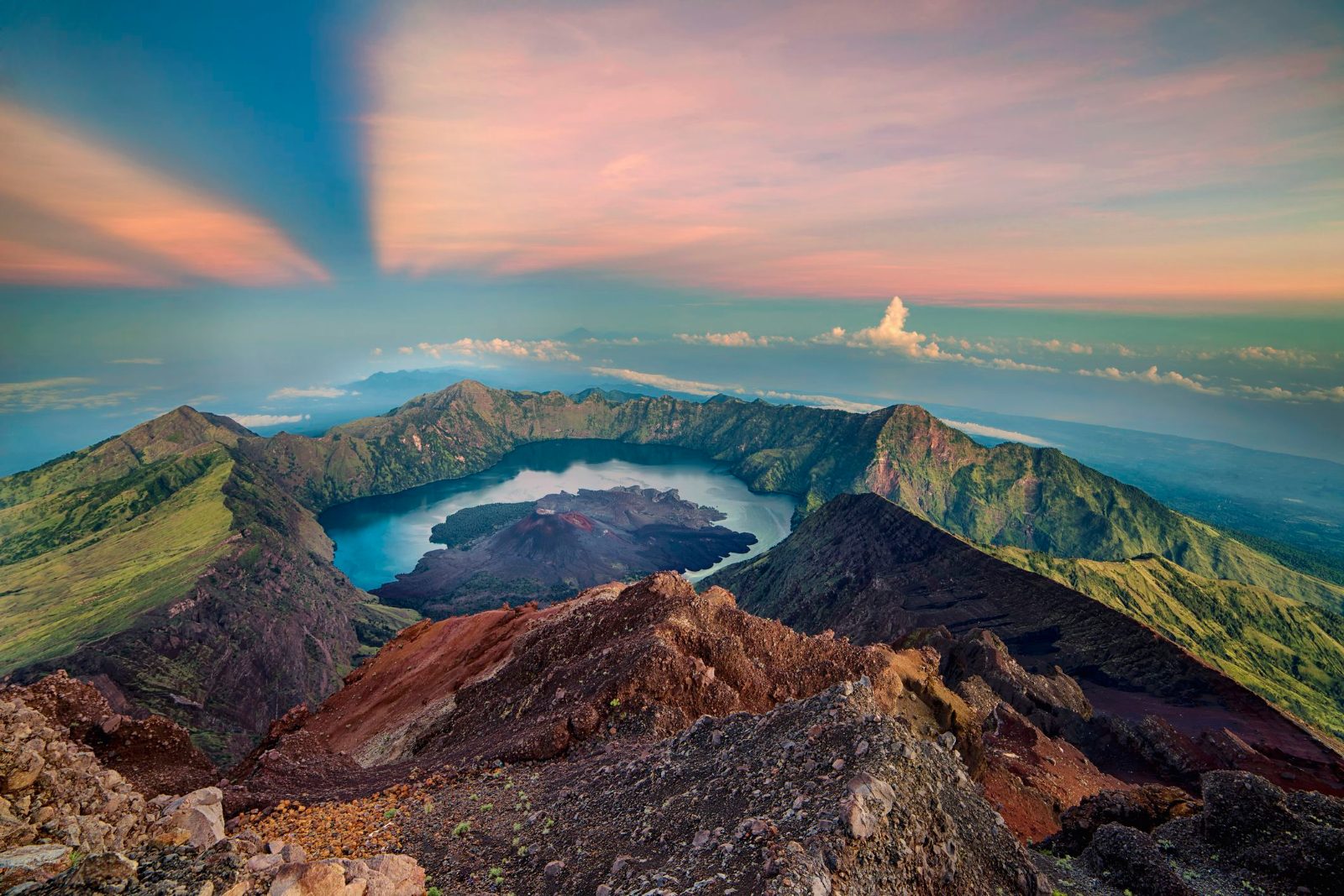
Lombok receives its rainfall from the northwest monsoon, a system that dumps the heaviest precipitation between December and March. During these months, Mount Rinjani National Park closes Class 1 trekking routes entirely—the volcanic soil becomes unstable, trails turn into rivers, and visibility drops to near zero above 2,000 meters. Park authorities enforce the closure strictly; no permits are issued. The dry season opens a five-month window from late April through early September when conditions stabilize. Morning starts typically offer clear skies and calm winds, but afternoon cloud cover rolls in by 14:00, especially during June and July. August and September mark the driest months, with less than 50mm of rain and the most reliable summit-day visibility. October and November transition back toward wetter patterns—occasional storms appear, though routes remain officially open. Temperature stratification defines the climb. Senaru and Sembalun villages sit at 600–1,200 meters, where daytime heat reaches 28–32°C and humidity stays high. The crater rim at 2,639 meters averages 12–18°C during the day, then plunges after sunset. Summit attempts begin between 02:00 and 03:00 to catch sunrise, when temperatures hover just above freezing and wind chill can drop the felt temperature below zero. Trekkers need insulated layers regardless of the season. Wind patterns intensify with altitude. Base-camp zones experience light breezes, but the exposed ridge to Rinjani's peak funnels gusts that regularly exceed 40 km/h during dry-season mornings. Cloud inversion layers form overnight, leaving the summit clear while lower slopes disappear into fog. This inversion reverses by mid-morning as thermals lift moisture upward. Understanding these daily cycles matters—summit attempts timed poorly encounter both reduced visibility and increased wind exposure.
“The crater rim at 2,639 meters averages 12–18°C during the day, then plunges after sunset.”
Understanding Mount Rinjani Weather and Optimal Climbing Seasons
The dry season from June to September offers the most stable trekking conditions on Mount Rinjani, with April, May, October and November as viable but wetter shoulder months; the park closes January to March for monsoon season.
June to September
Peak trekker numbers, busiest trailsDry, cool nights, daytime sun
This is the core climbing season when trails are driest and visibility for the summit push is most reliable.
April to May and October to November
Moderate, fewer trekkersWarmer, intermittent rain showers
Shoulder months bring a real chance of afternoon rain and slippery volcanic ash trails, though mornings are often still clear.
January to March
Park closed to trekkersHeavy monsoon rain, high trail risk
The national park authority closes Rinjani to trekking during these months due to landslide and flooding risk on the routes.
Early morning (pre-dawn to sunrise)
Quietest hours on summit trailClear skies, cold air, temperatures near freezing at altitude
Cloud cover typically builds through the morning, so summit attempts start hours before dawn to reach the crater rim while visibility is still clear.
Midday to afternoon
Thinning crowds descendingCloud buildup, higher chance of rain or mist
Weather at altitude tends to turn by late morning, which is why guided treks are structured around an early ascent and an earlier-than-usual descent.
Verdict: Aim for a pre-dawn summit push in July or August, when the dry season gives the clearest skies before midday cloud rolls in.
Mount Rinjani Weather Prep: Gear for Changing Conditions
Mount Rinjani's weather shifts dramatically from tropical heat at the base to freezing summit conditions, requiring layered gear for safe trekking.
-
Pack a waterproof jacket — Sudden rain and wind are common above 2,000 meters, especially during afternoon storms.
-
Bring thermal layers for the summit — Temperatures drop to freezing at the 3,726-meter peak, particularly during pre-dawn summit pushes.
-
Wear moisture-wicking base layers — High humidity at lower elevations causes sweat buildup that can lead to chills at higher altitudes.
-
Carry sun protection and a hat — Exposed ridges offer no shade, and UV intensity increases with elevation throughout the climb.
-
Include a headlamp with spare batteries — Early summit starts begin around 2:00–3:00 AM in complete darkness, and weather can delay descent.
-
Pack trekking poles — Loose volcanic scree becomes slippery during rain, and poles provide stability on steep descents.
Mount Rinjani Weather-Dependent Operating Hours
Mount Rinjani National Park's gates operate on the same schedule every day of the week, though rangers can adjust or suspend access if weather conditions turn unsafe.
| Monday | 07:00 – 19:00 | Gate check-in closes 15:00 |
|---|---|---|
| Tuesday | 07:00 – 19:00 | Gate check-in closes 15:00 |
| Wednesday | 07:00 – 19:00 | Gate check-in closes 15:00 |
| Thursday | 07:00 – 19:00 | Gate check-in closes 15:00 |
| Friday | 07:00 – 19:00 | Gate check-in closes 15:00 |
| Saturday | 07:00 – 19:00 | Gate check-in closes 15:00 |
| Sunday | 07:00 – 19:00 | Gate check-in closes 15:00 |
Posted hours stay the same year-round, but park staff can shorten access or close the gate on short notice during heavy rain, high wind, or other unsafe weather, so it is worth confirming conditions with the official park office before arrival.
Check availability
Frequently Asked Questions About Mount Rinjani Weather
Everything you need to know about mount rinjani weather